How to officiate a wedding for a friend
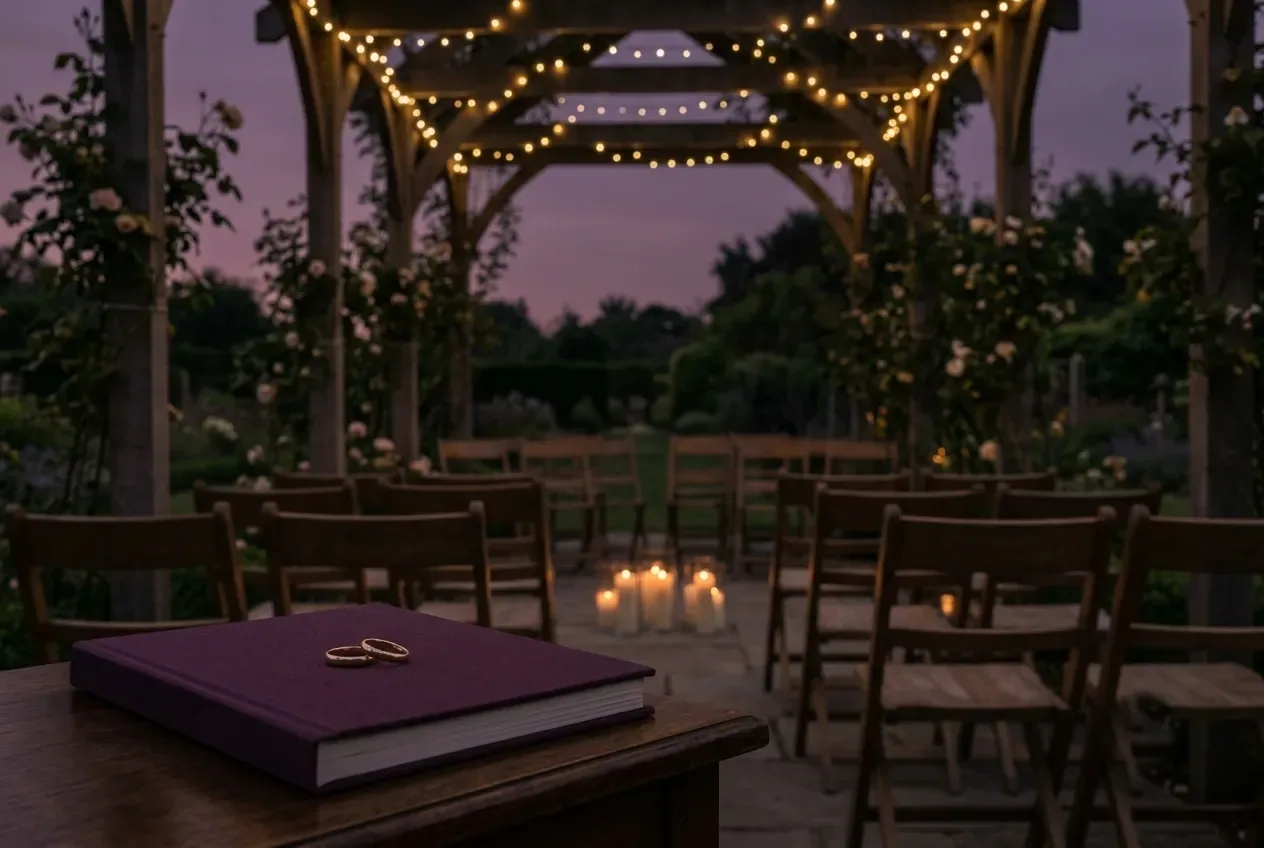
Two people you love asked you to marry them. That is one of the warmest requests anyone can make, and the flutter of nerves you feel right now is a sign you take it seriously. Good. You do not need to be a public speaker, and you do not need any prior experience. You need a little preparation and a plan, and this walkthrough gives you both. Read it once end to end, then come back to each step when you reach it.
Here is the reassuring truth up front: officiating a wedding for a friend is mostly logistics and heart. The legal part is smaller than you think, the ceremony itself is shorter than you think, and the couple already chose you because they trust your voice. Let’s take it in order.
Step one: get ordained and check the legal rules, in parallel
Two things have to be true before you can legally marry anyone: you have to be recognized to perform the ceremony, and the marriage license has to be handled correctly where the wedding takes place. Start both on the same day. They move at different speeds, and you do not want the slow one holding up the wedding.
Getting ordained is the quick, encouraging part. Recognized ministries ordain people online for free, in minutes. Two widely used ones are American Marriage Ministries (theamm.org) and the Universal Life Church (ulc.org). You fill out a short form, and you are ordained. Some places also ask an officiant to keep a copy of the ordination credential or register with a local office before the ceremony, so read the next step before you assume you are finished.
The legal rules are the part that genuinely varies, and the part worth nailing down early. Requirements depend on where the wedding is held, not where you live. What you are confirming: whether the officiant needs to register with a county or city office beforehand, how many witnesses must sign, when the couple should pick up the license and how long it stays valid, and the deadline for returning the signed license after the wedding. None of this is hard. It is simply a checklist you want in hand weeks ahead, not the morning of. Our plain-language overview walks through the categories to confirm: state marriage-law basics. And for ordination itself, including what to save and how to answer the couple’s “is this really legal” question, see getting ordained.
One practical note. The single most common way a friend-officiant creates stress is by leaving the license to the last week. Treat it as the first task, not the last. Once you know the rules and you are ordained, everything after this is the fun part.
Step two: talk with the couple about the ceremony they want
Before you write a word, sit down with the couple. This conversation shapes everything, and it doubles as reassurance for all three of you.
Ask about tone first. Do they want something light and funny, quietly emotional, traditional, or a blend? A couple who love to laugh will be uncomfortable inside a solemn script, and a couple who want tears will feel short-changed by a string of jokes. Match them, not your idea of what a wedding sounds like.
Then cover the practical choices:
- Vows. Are they writing their own, repeating traditional lines after you, or a mix? If they are writing their own, agree on a rough length so one person does not deliver a paragraph and the other a page.
- Readings. Do they want a reading or two, and who will deliver them? A reading is a lovely way to bring a sibling or close friend into the ceremony.
- Rings. Is there a ring exchange, and who is holding the rings?
- Traditions. Any cultural, family, or personal rituals they want included, and in what order.
- Names. How they want to be introduced at the end, and any names or pronunciations you must get exactly right (more on this shortly).
- The no list. Anything they specifically do not want mentioned. Ask directly. It saves everyone.
Take notes. Ask them to send you a few stories about how they met, a moment that made them sure, something the other person does that they love. You will use these when you write. This is also the moment to ask whether they want to see the script in advance. Many couples like to read the declaration of intent and pronouncement beforehand so there are no surprises, while keeping their own vows private from each other.
Step three: write a short, personal ceremony
A wedding ceremony has a standard shape, and that shape is your friend. It carries the emotion so you do not have to force it, and it tells you exactly what comes next when your heart is pounding. You do not need to be original. You need to be warm, clear, and true to this couple.
Here is the arc, in order:
- Welcome. Greet everyone, thank them for coming, and name what is happening. A sentence or two about why this gathering matters sets the tone.
- Words on the couple. This is the personal heart of the ceremony. Tell one or two short stories, say what their love looks like from the outside, speak to who they are together. Keep it to a couple of minutes; this is a highlight, not a biography.
- Reading(s). Invite the reader up, or read it yourself if that is the plan.
- Declaration of intent. The “do you take this person” moment. Each partner answers “I do.” This is one of the parts that often has to be worded a particular way to satisfy the license, so confirm it against the legal rules from step one.
- Vows. The couple’s promises to each other, whether self-written or repeated after you.
- Ring exchange. A line about what the rings represent, then each partner places the ring and may repeat a short line.
- Pronouncement. You declare them married. This is the other line that sometimes has required wording, so double-check it.
- The kiss. Invite the couple to seal it. This is the joyful release the whole room is waiting for.
- The introduction. Present the newly married couple by the names they chose. Cue the recessional and let the celebration begin.
Write it out in full, word for word, including your own transitions and the couple’s cue lines. Do not plan to improvise the structure on the day. A few honest, specific sentences about the couple will land far better than polished generalities, so lean on the stories they gave you and resist the urge to sound like a greeting card.
If you want the arc explained block by block with sample language you can adapt, our nine-block ceremony outline breaks down each section, and the full how to write a wedding ceremony script guide walks you from blank page to finished draft. The pillar page also has a free ceremony-script outline you can start from, and the dedicated script-writing chapter goes deeper on voice, length, and the personal section.
Step four: get the names exactly right
This is small and it matters enormously. Getting a name wrong in the middle of a wedding is the mistake people remember. Getting every name right, especially ones you are less sure of, is a quiet gift to the family.
Confirm the correct spelling and pronunciation of both partners, their parents if you name them, anyone doing a reading, and the couple’s names as they want to be introduced at the end. When a name is easy to stumble over, write it phonetically right in your script, in brackets, next to the real spelling. Seeing “Siobhan [shuh-VAWN]” as you read keeps you steady. Say each name aloud several times while you practice until it stops feeling breakable. Do not trust yourself to remember on the day; your memory will not be at its best when a hundred people are watching.
Step five: rehearse out loud and time it
Reading the script silently in your head is not rehearsing. You have to say it out loud, standing up, at the pace you will actually use. Do this several times in the days before. Reading aloud is how you find the tongue-twisters, the sentences that run out of breath, and the transitions that feel clunky, and it is how the words start to feel like yours instead of something on a page.
Time yourself while you rehearse. Most ceremonies run about 15 to 25 minutes, and that is a comfortable target to aim for. Long enough to feel meaningful, short enough that guests stay with you and the couple are not standing in the sun for an hour. If your read comes in much longer, trim the general reflections before the personal stories; the stories are what people came to hear. If it is very short, it may be exactly right, or the couple may want one more reading.
Rehearse the physical choreography too, ideally at the actual rehearsal: where you stand, when the couple face each other, who hands over the rings, where you set your script so your hands are free for the parts that need them. A free ceremony timeline builder can help you and the couple lay out the order of the day and see how the pieces fit around your part.
Step six: the day itself
You have done the work. Today you mostly execute, and a few habits keep you calm and in control.
- Arrive early. Get there well before guests, find the officiant’s spot, and confirm any last details with the couple and the coordinator. Early arrival is the cheapest anxiety reducer there is.
- Bring a clean, printed script. Print it in a large, readable font, single-sided, and number the pages. A folder or a nice binder looks intentional and keeps everything together. Do not rely on a phone that can lock, glare, or ring.
- Be heard. Speak slower and louder than feels natural; nerves make everyone rush and drop their volume. If there is a microphone, do a quick sound check. If there is not, project to the back row. People forgive a lot, but they cannot forgive not hearing the vows.
- Hold your nerve. If your voice shakes at the start, that is normal and it passes. Take a breath, let a pause land, and remember the room is entirely on your side. If you lose your place, pause, find it, and carry on. Nobody minds a calm pause. The couple are not judging your performance; they are getting married.
- Sign and return the license. Right after the ceremony, while everyone is together, complete the license with the couple and any witnesses. Confirm every signature and date is filled in correctly. Then make sure it is returned to the correct office by the deadline. This is the one task that is not done when the kiss happens, and it is the one that makes the marriage official, so do not let the celebration sweep it aside.
That last point deserves its own beat. The ceremony is the emotional event; the signed and returned license is the legal one. Protect it. Keep it flat and clean, know before the day exactly who returns it and by when, and if you can, hand it off or mail it the same weekend rather than trusting it to a busy following week.
Should you charge a friend?
For a friend or family member marrying one couple, charging is entirely optional, and many people do it for free as a gift. That is a completely normal and gracious choice. You were asked because of who you are to them, not because you are a vendor.
If real costs come up, such as travel, a marriage-license registration fee, or printing, it is reasonable to let the couple cover those without turning the whole thing into a paid job. Some officiants ask for nothing and are delighted with a heartfelt thank-you and a place at the reception. There is no expectation here and no wrong answer. Decide what feels right between you and the couple, and if in doubt, doing it as a gift is always well received.
You are more ready than you feel
Step back and look at what this actually asks of you. Get ordained and learn the local rules early. Listen to the couple. Write a short, warm, honest ceremony around a structure that does most of the work. Get the names right, rehearse out loud, and time it. Show up early, speak up, breathe, and handle the license. That is the whole job.
The couple did not choose a professional. They chose you, because your voice is the one they want carrying them into this. Trust that. When you stand up there and look at two people you love promising themselves to each other, the nerves will turn into something much better, and you will be exactly the person this day needed. Take the first step today: get ordained and check the rules, and everything after it falls into place.
Frequently Asked Questions
- I have never done this — where do I start?
- Start with two things in parallel: get ordained (free, online, a few minutes) and ask the couple which county they will get their marriage license in, then call that clerk to learn the exact officiant requirements and any registration lead time. With authority and paperwork settled, the rest is craft: write a short, personal ceremony and rehearse it out loud.
- What do I actually say during the ceremony?
- A standard wedding follows a reliable arc: a welcome, a few words about the couple, any readings, the declaration of intent ("do you take…"), the vows, the ring exchange, the pronouncement, and the kiss. You have wide freedom inside that shape. Our ceremony-script guide and the free ceremony-script outline in this playbook give you a ready structure to fill in.
- How long should a wedding ceremony be?
- Most ceremonies land between fifteen and twenty-five minutes, and that is the range guests remember fondly. Time it while you rehearse; if you are running long, trim a reading rather than rush the vows. The timeline builder in our free tools helps you sketch the order and watch the minutes add up.
- What is the one thing I must not get wrong?
- Two things: the legal paperwork and the names. Sign and return the marriage license correctly and on time, and confirm the pronunciation and order of every name you will say aloud — write the phonetics right into your script. A beautiful ceremony is undone fast by a fumbled name or an invalid license.
- Should I charge my friend?
- That is entirely your call. Many friends do it as a gift and charge nothing; some accept a thank-you or cover their costs. There is no rule. If officiating turns out to be something you love and want to do again for strangers, the later chapters of this playbook show how to price it and build it into real work.
Run every ceremony from one desk
RiteBinder is built for officiants — book the ceremony, write it with the couple or family, send a signed agreement with a deposit on your own links, and read from a podium that needs no signal. The free tier holds 2 active ceremonies at a time, a real working trial.