Rehearsals and day-of logistics for officiants
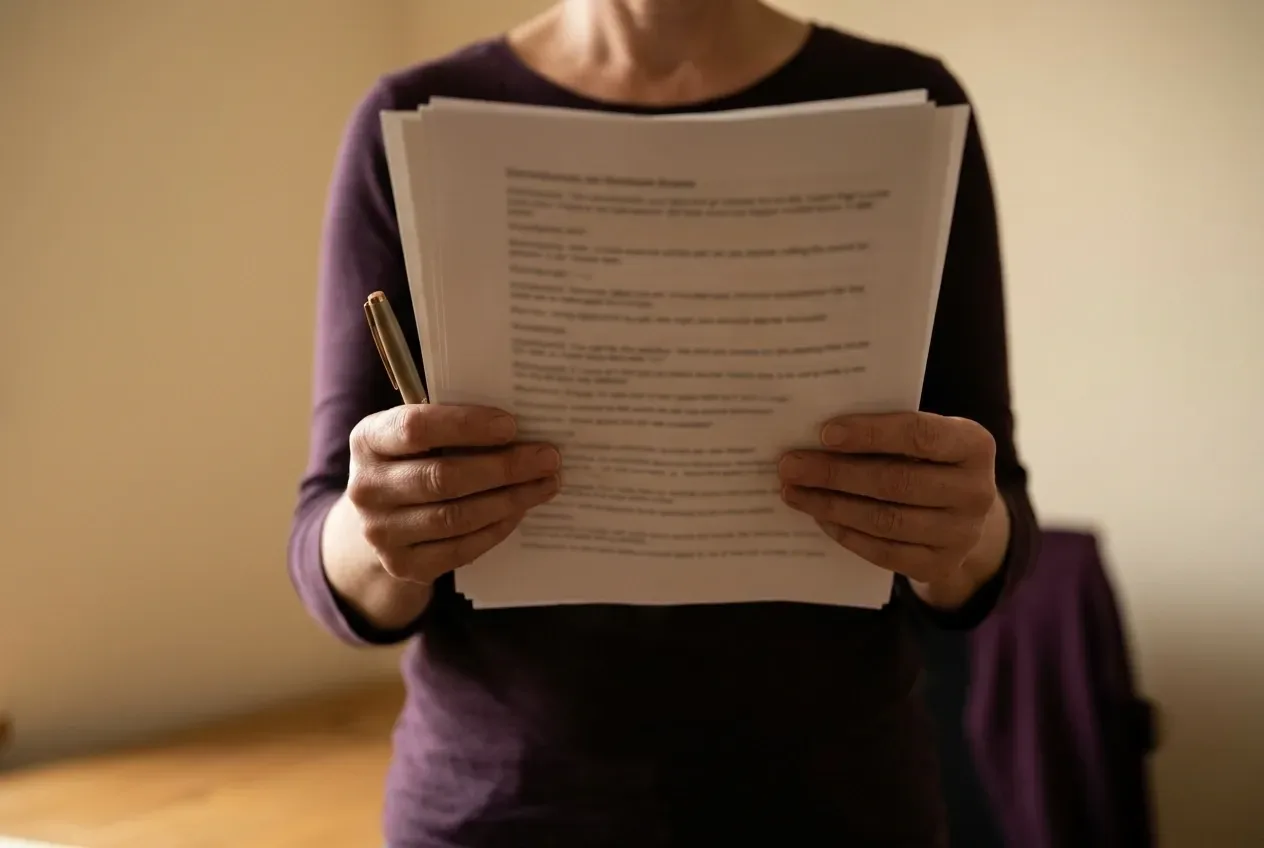
The script can be perfect and the couple can be radiant, and the day still hinges on the small mechanical things: who walks in when, where people stand, whether the back row can hear you, and whether the license leaves with the right signatures on it. Those pieces are your job. The couple is holding a hundred emotions at once. You are the one person in the room whose entire role is to keep the ceremony moving cleanly from the first step to the last. That starts at the rehearsal and ends when the paperwork is filed.
This chapter walks through running a brisk, useful rehearsal and then carrying that calm into the ceremony itself. Once you have written the words, this is the part that turns a script into a wedding. If you are still drafting, the script-writing chapter covers that side, and you can always come back here.
You are the rehearsal director
At most weddings, nobody has clearly claimed the rehearsal. The planner may run the logistics of the venue, but the flow of the ceremony itself is yours to lead. Say so early, warmly, and take the room. People are relieved when someone competent is obviously in charge. A rehearsal that drifts for an hour leaves everyone anxious; a rehearsal that runs cleanly in twenty or thirty minutes leaves everyone confident.
Your goal at the rehearsal is not to perform the ceremony. You will not read the full script, and you should not. Your goal is to set positions and movement so that tomorrow nobody has to think. Walk the mechanics, confirm the cues, and let people go.
Walk the processional order and spacing
Start at the back, where the ceremony begins. Establish the order people walk in, and just as importantly, the spacing between them. A processional that bunches up looks rushed; one with gaps too wide drags. A steady, unhurried pace with consistent spacing reads beautifully and photographs well.
Sorting out that order for a real wedding party, with its particular mix of families and attendants, is the fiddly part. The processional order builder lets you lay out the party and settle the sequence before you are standing in the aisle with fifteen people looking at you. Walk in with the order already decided, and the rehearsal moves fast.
Have everyone actually walk it once, not just talk through it. Watch where they end up. Adjust anyone who lands too close to the couple or too far off their mark.
Set positions and mark the ground
Once people have walked in, freeze the picture. This is where everyone stands during the ceremony, and it matters more than most first-time officiants expect. Attendants should form a gentle arc or clean line, angled slightly inward so they are part of the scene rather than a wall behind it. Give the couple room at the center. Make sure nobody is directly blocking a parent’s view or standing where the photographer cannot get a clean line to the couple’s faces.
Note the marks. A particular tile, a seam in the floor, the edge of an arch. People remember “stand where the runner meets the grass” far better than a vague gesture. Set your own position too, and check that you are not the one blocking the shot. You generally want to stand slightly to the side so the camera sees the couple, not your back.
Cue the couple on the moving parts
There are a few moments in every ceremony where the couple has to do something physical, and those are the moments they will fumble if you have not rehearsed them. Two come up almost every time.
The first is stepping forward or turning to face each other for the vows. Tell them exactly when it happens and what your cue will be, whether a line you say or a small gesture of your hand. The second is the rings. Walk through who holds them, when they are handed over, and which hand the ring goes on. Ring nerves are real, and a couple that has done the handoff once at rehearsal will do it smoothly on the day.
If there is a unity ritual, a reading, or any handoff to another participant, walk that too. Confirm who steps up, from where, and how they get back to their spot. The people doing readings should know exactly when you will invite them forward.
Run the recessional and close it out
End the rehearsal with the exit, because it is the part people forget and the part that empties the room at the end of the real ceremony. Establish the order out, the pace, and where everyone goes once they clear the aisle. Then release the party. Keep the whole thing brisk. A rehearsal that respects everyone’s time earns you trust for the day itself.
What to bring on the day
Pack the night before, not in the car. Your ceremony materials are simple, but forgetting one of them is the kind of mistake that shows.
Bring your script printed large enough to read at a glance without squinting, and bring a backup copy. Paper fails in small ways, wind lifts a page, a drink spills, so a second copy costs you nothing and saves you everything. If you hold the marriage license, that comes with you, and it is the one item you cannot re-print on site. A working pen, tested, ideally two, because the license has to be signed with something that actually writes. Clean reading copies for anyone doing a reading, so they are not squinting at their phone. And any ritual items the ceremony calls for, coordinated in advance with the couple so it is clear who is responsible for each one.
This is one place a day-of tool genuinely helps. RiteBinder has a podium mode that displays your script large and legible and keeps working with no signal at all, so a dead cell zone or airplane mode never leaves you stranded mid-ceremony. Paper backup still travels with you regardless; belt and suspenders is the right instinct on a wedding day.
For the full list to check off, see the free day-of checklist below.
Arrive early and check in with the coordinator
Get there well before you think you need to. Early arrival gives you time to handle the thing that goes wrong, and something small usually does. It also lets you find the venue coordinator or planner and introduce yourself before the rush.
That check-in matters. The coordinator knows the timeline, the cue for the processional to start, and who is managing the flow of guests. A two-minute conversation aligns you both: confirm what signals the start, roughly when you are aiming to begin, and how you will hand off at the end. When you and the coordinator are in sync, the ceremony starts on time and nobody is standing around wondering.
Use the early window to walk your position, glance at the sightlines, and get a feel for the space while it is calm.
Sound is the thing that fails
If ceremonies fail on one thing more than any other, it is sound. A ceremony nobody can hear is a ceremony that did not really happen for half the guests, no matter how good the words were. Treat audio as a first-class concern, not an afterthought.
Ask in advance whether there is a microphone and a sound system. If there is, do not assume it works. Test it before guests arrive, at a real speaking volume, standing where you will actually stand. Listen from the back row if you can. Check whether a lapel mic will pick up the couple’s vows or only your voice, and decide whether that matters for this ceremony.
If there is no mic, plan to project. Speak from the chest, slow down, and aim your voice at the last row rather than the front. Ask the couple’s vows to be spoken up too, or plan to repeat key lines so everyone shares the moment.
Outdoors, add wind to your planning. Open air swallows sound, and a breeze can erase you entirely. Position yourself so the wind is not carrying your voice away from the guests, keep pages weighted or clipped so they do not flap, and lean harder on projection than you would inside. If a sound system is available outdoors, it is almost always worth using.
Your role with the marriage license on the day
The ceremony is the meaningful part; the license is the legal part, and you are responsible for it. Getting this right is not optional, and the rules that govern it are set where the wedding happens. The marriage-law basics chapter covers how those requirements differ by place, and you should know your local ones cold before you ever officiate.
On the day, the sequence is straightforward. Before the ceremony begins, confirm that a valid, unexpired license is physically in hand. Not “on its way,” not “at home,” in hand. If the license is missing or expired, the celebration can still happen, but you cannot complete a legal marriage, and it is far better to know that before you stand up front than after.
After the ceremony, complete and sign the license accurately. Fill in every field the form asks for, match names to how they appear on the license, and write legibly. Small errors here cause real headaches for the couple later, so slow down and check your work. Then make sure the signed license is returned to the issuing office within the required window. Whether that is your responsibility or someone else’s should be settled in advance, but as the officiant you are usually the one who signs, and you should confirm the return actually happens rather than assuming it will.
Handle this part with the seriousness it deserves and the couple never has to think about it. That reliability is a real part of your reputation, and it is one of the things that turns into referrals. The getting-clients chapter covers how that word of mouth builds.
Staying composed when something goes wrong
Something will go sideways eventually. A phone rings, a ring drops, a reader freezes, a page blows away, a name comes out wrong. The ceremony is not ruined by any of these. It is only ruined if you let the room feel that it is. Your composure is the ceremony’s composure.
The move is simple: recover lightly and keep going. A small, warm acknowledgment defuses almost anything. If a phone rings, a gentle smile and a beat of patience is plenty. If you stumble on a word, correct it and move on without apologizing three times. If a ring is dropped, wait calmly while it is retrieved and pick the thread right back up. Guests take their cue from you. When you stay easy, they read the moment as charming rather than as a crisis.
Have a couple of soft recovery lines ready in your head so you are not inventing them under pressure. Keep them kind and never at anyone’s expense. And keep the ceremony moving forward; the momentum you built at the rehearsal is what carries you through the wobble. The couple will remember that you stayed steady, and that steadiness is a large part of what they hired you for.
Bringing it together
A calm wedding day is not luck. It is a well-run rehearsal, a packed bag, an early arrival, sound that works, a license handled correctly, and an officiant who does not rattle. Each piece is simple on its own. Together they are the difference between a ceremony that happens to people and one you quietly steer from start to finish.
Start with the flow: settle the party’s order in the processional order builder, then walk it clean at rehearsal. Grab the free day-of checklist below so nothing gets left in the car. And when you want the wider view of building this into a craft and a business, the officiant start hub ties the chapters together. If you are running two ceremonies at a time to start, RiteBinder’s free tier covers exactly that: 2 active ceremonies at a time, enough to find your footing before you scale up.
Free toolkit
The officiant day-of checklist
Everything to bring, confirm, and do on the wedding day, in order — so nothing is left to memory and you arrive calm.
Unsubscribe is one click, and we never share addresses.
Something went wrong and we couldn’t send it just now. Please try again in a moment.
Bring
- Your ceremony script in large print — plus a backup printed copy.
- The marriage license, if you are the one holding it.
- A pen that works (and a spare) for signing the license.
- Reading copies for anyone doing a reading.
- Any unity-ritual items you are responsible for.
- Your phone charged, and a small folder or portfolio to hold it all.
On arrival (early)
- Find the coordinator or point of contact and check in.
- Confirm the exact start signal and who cues you.
- Test the microphone, or plan how you will project to the back row.
- Confirm where you stand and where the couple and party enter.
- Verify the couple has the valid, unexpired license in hand.
Just before
- Silence your phone (or set it to the podium view you will read from).
- Do a final glance at name pronunciations and your cues.
- Take a breath — your calm sets the room’s.
During
- Speak slowly, project, and let the pauses land.
- If something goes sideways, recover lightly and keep going.
- Watch the couple, not your pages, at the vows and the kiss.
After
- Complete and sign the marriage license accurately.
- Confirm the plan to return it to the issuing office by the deadline.
- Trade cards with the coordinator and photographer.
- Send the couple a warm note — and, in a day or two, a review link.
A starting point to adapt to your venues and state — verify the license steps with the local clerk.
Frequently Asked Questions
- What does the officiant do at the rehearsal?
- You are effectively the director. Walk the wedding party through the processional order and spacing, set where everyone stands, cue the couple on when to step forward and exchange rings, and run the recessional. Keep it brisk and reassuring — a rehearsal exists to remove day-of anxiety, not to run the whole ceremony verbatim. Our processional order builder helps you lay out the walk-in.
- What should I bring on the wedding day?
- Your script in large print (and a backup copy), the marriage license if you are holding it, a pen that works, and anything the ceremony needs — ring cue, reading copies, a unity-ritual prop. Arrive early, find the coordinator, confirm the start signal, and check that you can be heard. The free day-of checklist in this chapter lists it all so nothing is left to memory.
- How do I make sure I can be heard?
- Sound is the most common ceremony failure. Ask the venue or DJ whether a microphone is available for the officiant, test it before guests arrive, and if there is no amplification, plan to project to the back row. For an outdoor ceremony, factor wind and distance. It does not matter how good the words are if the guests in row ten cannot hear them.
- What is my role with the marriage license on the day?
- Confirm the couple has the valid, unexpired license in hand before the ceremony — you cannot solemnize without it. After the ceremony, complete and sign it accurately and make sure it is returned to the issuing office by the deadline. Many officiants handle the return themselves to be certain it is not forgotten in the celebration.
- What if something goes wrong mid-ceremony?
- Stay calm and keep going — your composure sets the room’s. A dropped ring, a crying baby, a gust that scatters your pages: name it lightly if needed, recover, and move on. Guests remember warmth and steadiness, not a small stumble. Having your script large and backed up, and knowing your cues cold from the rehearsal, is what lets you improvise the small stuff.
Run every ceremony from one desk
RiteBinder is built for officiants — book the ceremony, write it with the couple or family, send a signed agreement with a deposit on your own links, and read from a podium that needs no signal. The free tier holds 2 active ceremonies at a time, a real working trial.